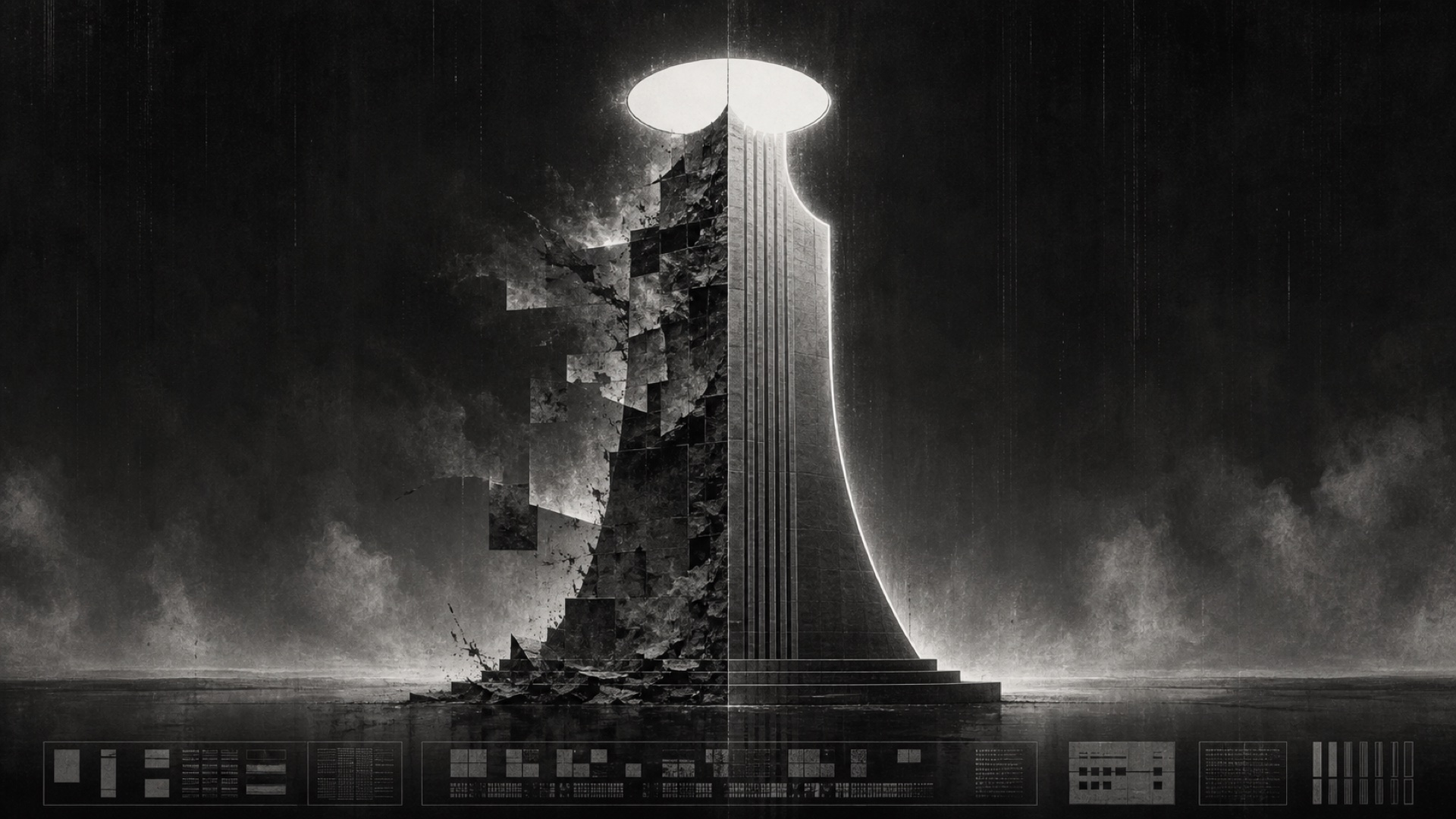
“Failure is the mother of success.” “Fail fast, fail often.” “Embrace failure.” You probably see these lines every week. I used to believe them too.
Then I ran into a strange data point. From 1986 to 2000, researchers tracked nearly 9,000 American entrepreneurs: the success rate of first-time founders was almost the same as that of founders who had previously failed and tried again. Failure had not brought the latter group to a better position. Another ten-year study of 71 surgeons and 6,500 heart operations was even sharper: surgeons who had botched procedures performed worse in later procedures, not better.
Both numbers appear in former NASA engineer Ozan Varol’s Think Like a Rocket Scientist (2020). He opens up Silicon Valley’s festival of “fast failure” and points to the thing we pretend not to see: failure itself is not data; reflection is.
Fast failure is not the goal. Fast learning is.
This is cybernetics moved into another room. Failure without a feedback loop and success without a feedback loop have the same information content: zero.
Failure Does Not Become Data by Itself
Varol’s explanation is cold. When failure happens, the brain’s default action is not analysis. It is face-saving:
- we hide the failure, from others and from ourselves;
- we distort the facts, narrating it as “almost” or “bad timing”;
- we blame the outside - competitors, regulators, luck;
- we settle for shallow causes, like “if only we had had more cash.”
Each move makes us look less foolish. The price is that the signal is erased. The loop has returned a difference, and we manually zero it out.
Varol cites Edison. After thousands of failed experiments, a colleague was discouraged. Edison said: “We have learned for a certainty that the thing can’t be done that way.” That is the lawful use of failure. It tells you “do not go this way.” But only if you admit that this is what it is telling you, instead of narrating it as bad luck.
SpaceX Changed One Number
Take a concrete engineering example. The first three Falcon 1 launches failed:
- First launch (2006): an aluminum nut corroded, a fuel line leaked, and the rocket fell into the ocean after 30 seconds.
- Second launch (2007): engine fuel flow was interrupted; after 7.5 minutes it flew out of sight but did not reach orbit.
- Third launch (2008): during stage separation, the first stage collided with the second.
Musk was nearly bankrupt. There was no money for a fourth failure.
What did they do? In engineer Hans Königsmann’s words: “We changed only one number based on data from the third flight.” They extended the delay before the two stages separated. Two months later, Falcon 1 reached Earth orbit, and SpaceX received a $1.6 billion NASA contract.
That is what Sim Sitkin calls intelligent failure. Failure is not valuable by itself. The one parameter you read out of it is valuable. The first three failures returned three specific gaps. The fourth needed only that one gap corrected. This has little to do with “embracing failure” or “daring to try.” It is measurement.
Success Is Also Open Loop
But the most expensive part of Varol’s book is not chapter 8, on failure. It is chapter 9: success is the greatest failure.
Challenger disintegrated in 1986, killing seven astronauts. Columbia disintegrated during reentry in 2003, killing seven more. Their first-order causes differed - O-ring failure versus foam insulation shedding - but sociologist Diane Vaughan gives them the same root: normalization of deviance.
The mechanism is this. The O-ring had shown problems in the cold long before, but each launch “got through.” Each successful passage led NASA to reclassify the issue from “this is a bug” to “this is acceptable risk.”
The abnormal had become normal.
Feynman called it NASA’s “Russian roulette.”
Success hides deviation. Each additional “we got away with it” lowers the alarm line by one notch. When the environment finally breaks through that line, you can no longer tell where the problem began.
In daily life, this is painful: when something “got through again,” we tend to think it is not a problem. It may only be an unexploded device that has not yet been triggered.
How ABS Turned Taxi Drivers into Gamblers
One study in Munich has stayed with me. A taxi fleet was split in half: some cars had ABS anti-lock brakes, some did not, with other configurations identical. Drivers knew whether their cars had ABS.
After three years, the accident rate was the same. Behavior, however, changed. Drivers with ABS followed more closely, took corners harder, changed lanes more casually, and had more near misses.
ABS did not reduce accidents. It allowed drivers to spend the safety they had saved. Psychologist Gerald Wilde called this risk homeostasis.
The same mechanism lives inside Challenger. The O-ring had a “3x safety margin,” and primary and secondary ring redundancy. These protections made management feel “the homework was done,” so the allowable temperature window moved downward. The safety measures were not invalidated. They were consumed.
After reading this, I began to ask myself: how many safety nets have I added, and how much more aggressive behavior have I bought with them? Health insurance makes staying up late feel less dangerous; backups make git push --force easier; with LLMs as a backstop, I sometimes review PRs more carelessly.
A sense of safety is not safety. ABS does not necessarily reduce accidents. It may only transform the same accident rate into a bolder driving style.
Premortem
So what do we do?
Varol’s tool is the premortem. Its ancestry is Charlie Munger’s country saying:
I want to know where I am going to die, so I will never go there.
The operation is straightforward. Before you do the thing - launch the rocket, start the project, sign the contract, write the PRD - you assume it has already failed, then reason backward: how did it die?
Gary Klein reported in Harvard Business Review (2007) that this exercise can improve people’s ability to identify real causes of failure by roughly 30 percent. Compared with a postmortem, the premortem has one decisive advantage: the result has not happened yet, so hindsight bias has not arrived. A postmortem asks, “Why did this become what it became?” A premortem asks, “From which side might this decision collapse?”
Varol adds a harsher version: quantify the probability of failure. When Musk started SpaceX, he thought the chance of success was below 10 percent - he would not even let friends invest. The side effect of that estimate was that after the first three failures, he could continue, because he expected exactly that. If he had estimated an 80 percent chance of success, the first three launches would have shattered him.
Expectation management is cybernetics too.
Closing
After finishing the book, I realized Varol is not really repeating “rocket scientists are impressive.” He is repeating one thing:
Neither failure nor success is a signal by itself. The layer in between - observation, attribution, correction - is the signal.
Without that layer, failure is noise and success is more dangerous noise. A rocket that explodes teaches you only a little more than a rocket that reaches orbit: “this road does not work.” That small surplus has to be read, attributed, and converted into one changed number.
I wrote in the cybernetics piece:
Growth comes from wiring, not gritting your teeth.
Add one more line today:
Accidents and victories, without wiring, are both guesses.